
DV

Why pair programming is essential for remote learning
According to recent Gartner research, nearly 50% of employees across industries will continue to work remotely when the pandemic is over.
Build Engineering CapabilityField notes, primers, and case-tested patterns from Rangle on agentic systems, design systems, frontend, and AI strategy.
Showing 1–8 of 8 posts
According to recent Gartner research, nearly 50% of employees across industries will continue to work remotely when the pandemic is over.
Build Engineering Capability

We've all had ideas for a new game-changing product. Maybe it was a “shower thought”. Maybe you had an “aha” moment while struggling for the 15th time to complete a routine task. Or recent market research completed by your team showed a promising new market to exploit. Regardless of the inspiration, you were probably very excited to build out and launch this new product right?

Taking a break from the books and joining Rangle in January 2020 as a Marketing Co-Op, was when I first heard about Design Systems. Familiarizing myself on this topic reignited my lifelong passion for design. I thought, with the skills and approaches taught during my post-secondary studies, can be leveraged and used to illustrate the role of theoretical research into creating an effective Design System, which can mitigate various design issues later on.
Scale Design

Rangle recently rolled out new research uncovering how c-level executives are dealing with the pressure to deliver digital experiences and stay ahead of the curve of digital transformation. The report reveals that while 80 percent of the C-suite thinks about digital transformation at least once a week, and they're being "kept up at night" by the fact their digital costs are more than anticipated and the pressure to implement new technologies, such as artificial intelligence (AI), internet of things (IoT), mobile and cloud native.
Modernize Your Stack


When companies invest their time and money into building a product, they're making a bet that the end result will be genuinely useful to their customers. Are these investments always a gamble? Is there a way to consistently build products that solve real problems for real people? By listening to the needs of users who are unlike us, we can more easily catch the assumptions that have the potential to sink our products.
Align Product Strategy
It's been a few months since we finished our beta Bridge for Product Designers course, so it's a perfect time to reflect on the experience. If you haven't heard of us before, at Bridge we build and run part-time courses that are free for students with the goal of fostering a more inclusive, diverse, and accessible tech industry. Our courses are made by volunteers and hosted at tech companies in Toronto. They're designed to remove barriers for junior to intermediate professionals who are women, non-binary, or agender. We're able to efficiently build courses that are tailor-made for these groups by applying design thinking and lean development methodologies. We utilized processes like project discovery, user research, user journey mapping, usability testing, and iterative improvement. This is the story of how we used those methodologies to make a really amazing product.
Build Engineering Capability

eCommerce is no longer just an add-on to conventional brick and mortar sales, but an integral part of business strategy. Customers are buying online with increased frequency, while also using mobile to research purchasing decisions before stepping foot in a store. Whether it's a physical storefront or a digital one, eCommerce solutions need to meet customers where they're at in order to maximize profits for businesses and provide seamless shopping experiences for customers.
Escape CMS & Commerce Lock-In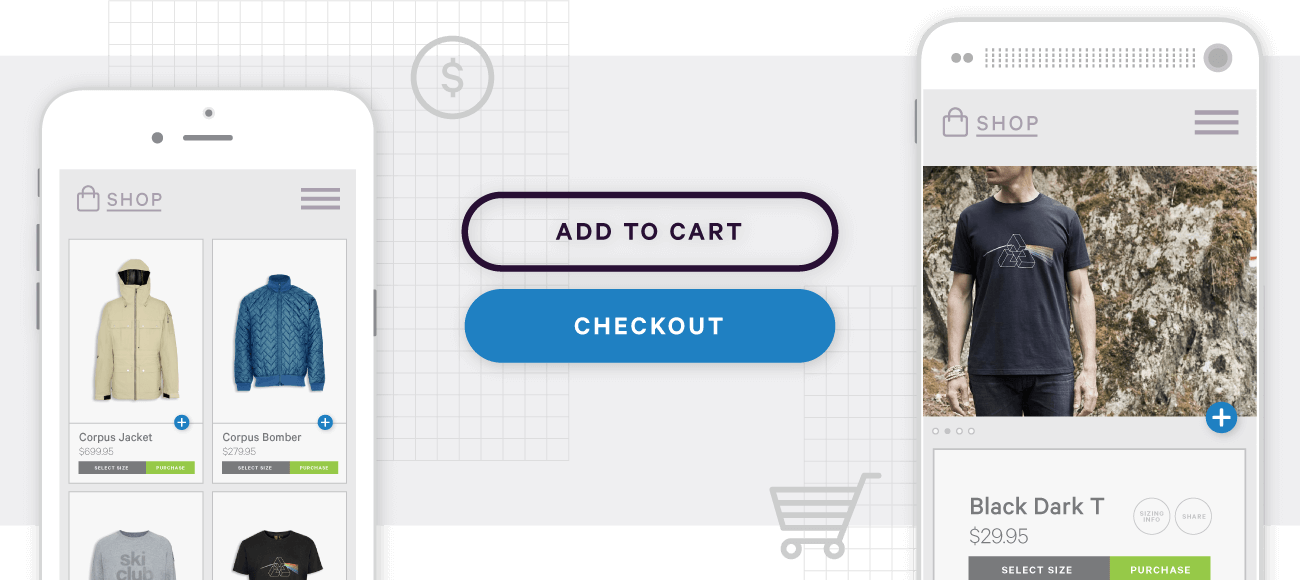

Online shopping continues to rapidly grow in the U.S. and global markets, yet most retailers are still figuring out how to do business in an omnichannel world. E-commerce driven companies like Amazon, on the other hand, are crushing brick and mortar focused retailers in online shopping revenue. More than half of every $1 of retail e-commerce growth in the U.S. is already earned by Amazon, according to a recent report by Macquarie Research. Traditional retailers are also losing ground in store-front sales across America with Amazon grabbing 24 percent of total retail growth in 2015.
Modernize Your Stack