Agentic Solutions
Our services

Designing & building LLM-powered experiences
Our teams help you discover and deploy AI capabilities quickly and efficiently by leveraging the right technology to meet your business needs. We specialize in designing and building experiences for large language models (LLMs).
See how we can help
Ensuring model consistency
While it is often difficult to manage the inherent probabilistic nature of LLMs, our teams have deep experience applying a variety of foundational techniques to manage around this inconsistency and increase model performance in an effort to reduce latency, improve accuracy, and reduce costs.
See how we can help
Evaluating LLM performance
The lack of evaluations has been a key challenge for deploying AI models to production. By treating model evaluations as unit tests for LLM and pairing prompting with evaluations, our experts can transform ambiguous dialogues into quantifiable experiments, making AI a more manageable software product.
See how we can helpFoundations
Learn the ways in which AI is creating Smart Experiences in digital products today.


What Is Agentic AI? A Practical Guide
Agentic AI is software that pursues goals across multiple steps using tools, planning, and judgment. What it is, how it works, when to use it, and when not to, from a team that builds it for enterprise clients.
Agentic Platform Studio

AI for Frontend Developers
Machine learning and artificial intelligence (AI) can be daunting subjects. You might've heard about neural networks, generative adversarial networks (GANs), and recurrent neural networks (RNNs) but have no clue what people are talking about.
Frontend Development


A practical guide to creating Smart Experiences through AI and design
The purpose of this article is to help you begin designing with artificial intelligence(AI). This isn't just a battle cry that "you too can become an AI designer!" but rather a reflection on our experiences exploring the intersection of AI and design —creating what we at Rangle call Smart Experiences. Think of Smart Experiences as experiences that feel "smart" and that help you avoid tedious or repetitive work. A Smart Experience can be as simple as an auto-complete suggestion and as complex as a virtual agent capable of answering your every question.


Artificial Intelligence for Creativity and Design
This past December I attended a Machine Learning for Creativity and Design workshop at NeurIPS 2018 in Montreal. NeurIPS (formerly NIPS) is a Conference on Neural Information Processing Systems or what today is often referred to as "AI". It's one of the most popular conferences in the space attracting thousands of submissions and attendants each year.

We built Nike’s first AI PoC in 3 weeks
Learn howRelated expertise
Agentic Product Engineering
Agentic Product Engineering
AI-augmented engineering workflows that ship production systems in weeks, not quarters.
See how we help
New Product Development
Product Development
Launch new products with a traction-first approach to discovery, delivery, and growth.
See how we helpRelated case studies
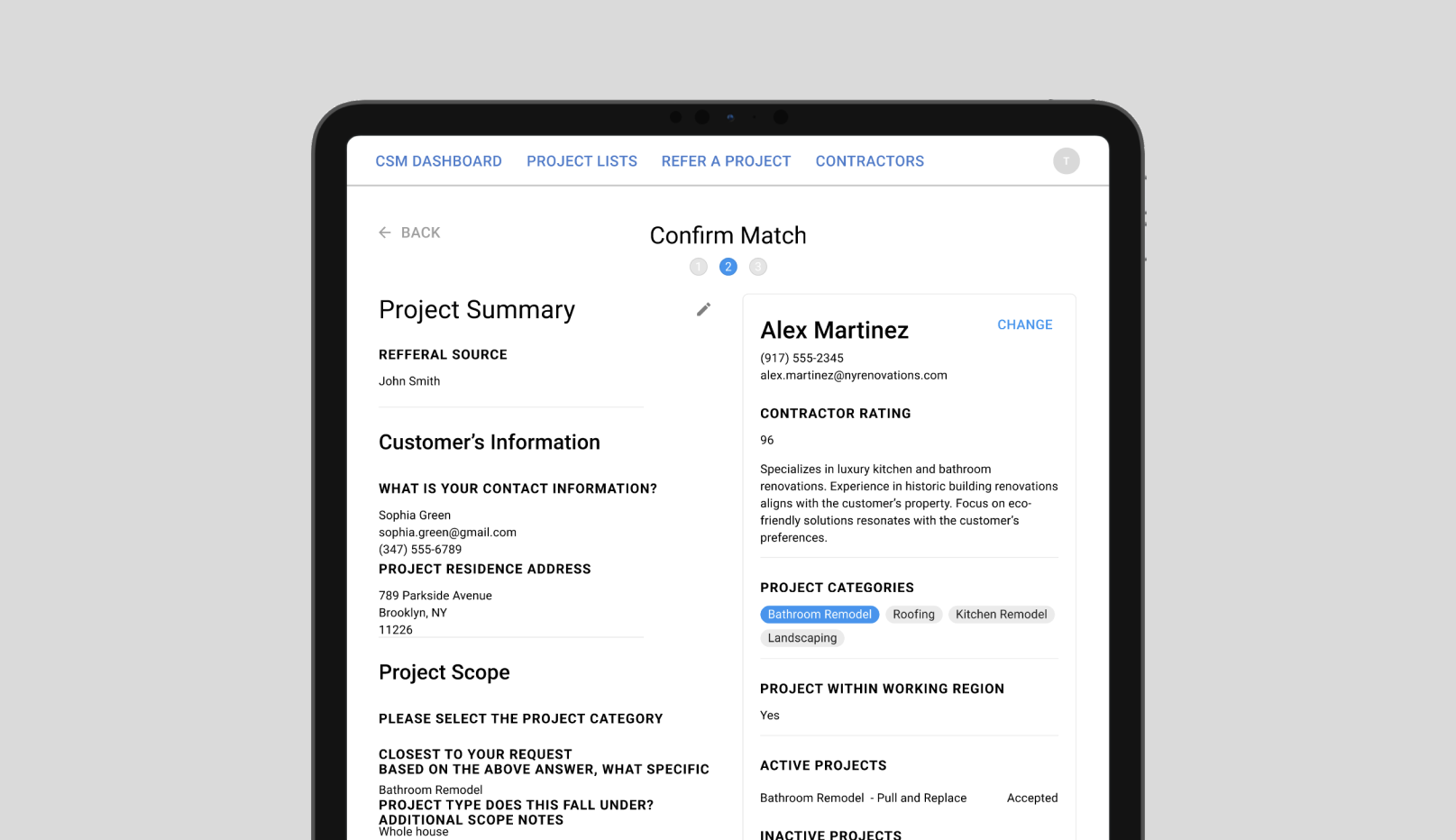
Three weeks to launch a scalable AI-powered marketplace solution with secure governance
In just three weeks, we built and deployed a secure human-in-the-loop matchmaking system for a service marketplace platform. Using generative AI and an open-source AI governance platform, the solution minimizes operational costs, accelerates lead response times, and scales without increasing headcount, with oversight, traceability, and control at its core.
Case Study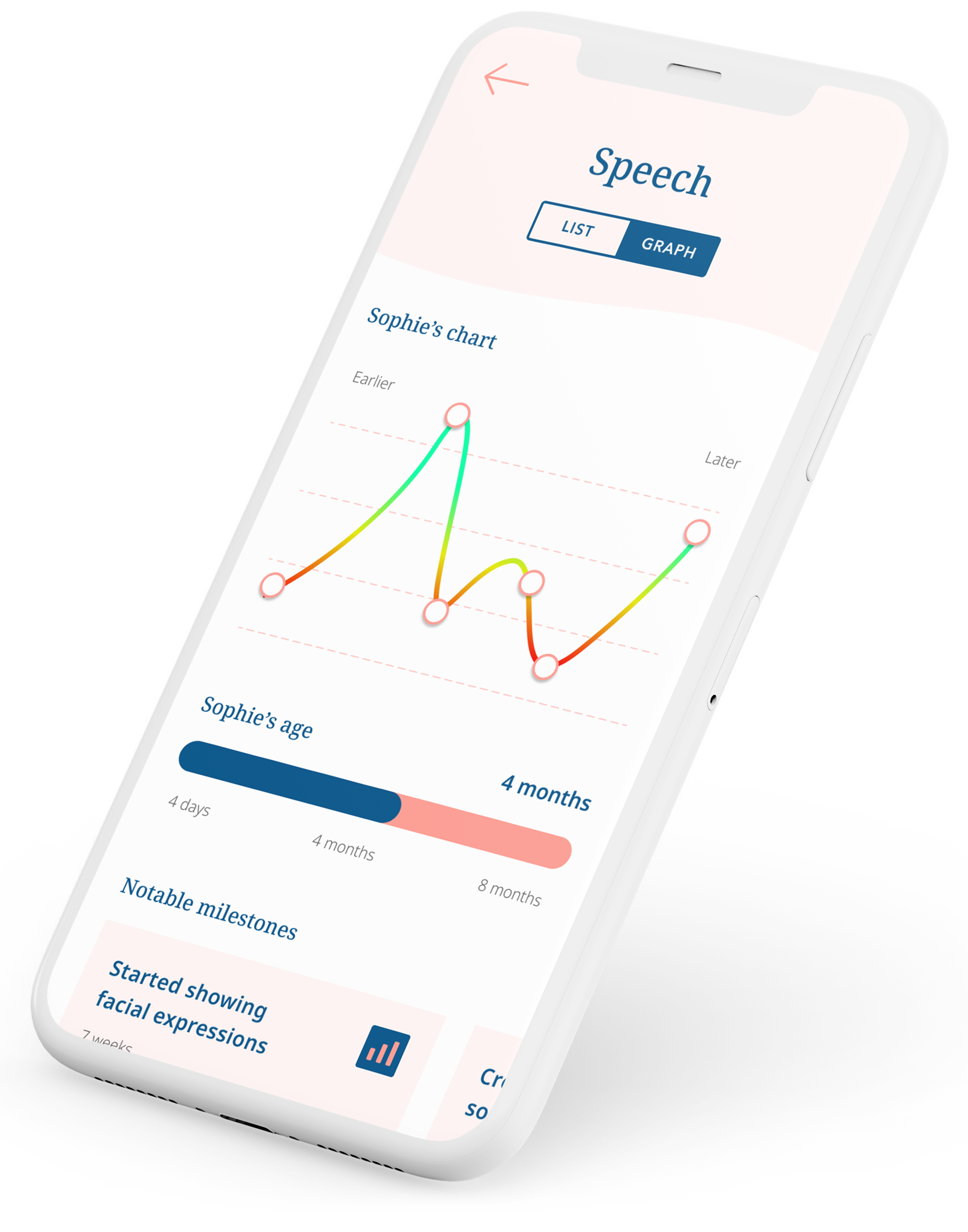
Babbly
An AI-enabled demo from concept to functional model in just 2 weeks
Babbly's founder needed a machine learning algorithm in a few weeks to close a pre-seed investment round.
Case StudyFrequently Asked Questions
Agentic development is a software delivery model where AI agents work as core team members alongside experienced human engineers. Unlike "AI-augmented" development where humans do the work with AI assistance, agentic development means AI agents write, review, test, and deploy significant portions of code under human architectural direction. The team is smaller (as few as 1-4 experienced engineers instead of 8-12), faster (weeks instead of months), and more consistent (every line of code gets thorough review). Rangle has redefined its entire engineering practice around this model. The tooling, review processes, quality controls, and team structures are all designed for agentic workflows. This isn't adding Copilot to an existing team; it's a fundamentally different way of delivering software.
Generative AI refers to AI systems that create content (text, images, code, analysis) in response to prompts. Agentic AI takes this further: AI agents that can plan, execute multi-step workflows, use tools, and take actions autonomously within defined boundaries. Rangle works across both: our generative AI service builds LLM-powered applications for end users (chatbots, content tools, recommendation engines), while our agentic AI service uses AI agents as part of the development process itself. Many projects combine both. For example, building a generative AI application (the product) using agentic development workflows (the process). The distinction matters for scoping: generative AI is about what you're building for your users, agentic AI is about how you're building it.
Most organizations adopt AI coding tools piecemeal. Individual developers use Copilot or ChatGPT as autocomplete assistants within traditional team structures. Agentic development is a structural change, not an incremental one. AI agents handle parallel workstreams, generate complete implementations from architectural specifications, write and run tests, and perform code review, all within defined boundaries set by experienced engineers. The human role shifts from writing code to defining architecture, setting constraints, reviewing output, and making judgment calls. The productivity difference is substantial: what a traditional 8-person team delivers in 3-6 months, an agentic team of 1-4 experienced engineers typically delivers in 4-8 weeks at comparable or higher quality.
Rangle builds production-grade generative AI applications across a range of use cases: conversational AI assistants, content generation systems, AI-powered search and recommendation engines, document analysis tools, and custom LLM integrations. We've built AI shopping assistants for Nike, AI marketplace platforms for buildco, and AI research tools for legal professionals. The key differentiator is that we don't stop at prototypes. We take generative AI from proof of concept to production-ready applications with proper governance, security, and observability built in. Our control layer Airbender adds runtime monitoring, output validation, and safety constraints so generative AI behaves reliably in enterprise environments.
Rangle delivers AI proofs of concept within 1 to 2 weeks, and a first functional prototype is often ready in 2 to 5 days. This isn't a slide deck or a mockup. It's a functional prototype demonstrating the core AI capability in your actual technology environment. For example, we built Nike's first working AI proof of concept in eight days and delivered the end-to-end shopping assistant in three weeks. Our speed comes from having standardized agentic workflows and Airbender, our control layer for reliable AI applications. Production deployment typically follows in 4-6 weeks. This timeline lets organizations validate AI use cases quickly before committing to larger investments.
Quality in agentic development is actually higher than in traditional development, for a specific reason: every line of code gets reviewed by an experienced engineer. In a traditional 8-person team, review coverage is inconsistent and varies by team composition. In our model, AI agents produce code at volume while experienced engineers review everything: architecture, implementation patterns, edge cases, security, and performance. We also use automated quality gates: AI-generated code runs through the same test suites, linting rules, and CI/CD pipelines as any other code. Airbender, our application control layer, adds runtime monitoring and safety constraints specifically designed for AI-generated outputs.
Airbender is Rangle's control layer for building reliable generative AI applications. It sits between your application and the AI models, providing runtime monitoring, output validation, safety constraints, and audit trails. This matters because raw LLM outputs are unpredictable. They can hallucinate, produce off-brand content, or return sensitive information without guardrails. Airbender enforces boundaries at the application level: validating outputs before they reach users, logging interactions for compliance, and providing fallback behaviors when AI responses don't meet quality thresholds. For enterprises in regulated industries, this control layer is what makes the difference between a demo and a production system that legal and compliance teams can approve.
The sweet spot for agentic development is projects in the $50K-$200K range, work that was previously difficult for consultancies to deliver profitably because traditional staffing models required large teams and long timelines. Agentic development changes the economics: a team of 1-4 experienced engineers with AI agents can deliver the same scope as a traditional team of 8-12 in roughly half the time. This makes mid-size projects highly viable: platform builds, design system implementations, application modernization, and AI feature development. For larger enterprise programs, we scale through parallel agentic workstreams rather than adding headcount, maintaining the speed and quality advantages at greater scope.
Yes. While many of our engagements involve working embedded alongside a client's existing engineering team, we also serve organizations that don't have internal engineering capability. For companies that need agentic development but don't want to build an engineering practice, Rangle offers ongoing maintenance contracts (dedicated support starting from six months) that provide continuous development, updates, and technical oversight without requiring you to hire engineers). This model works well for startups, non-technical organizations launching digital products, and companies that prefer to keep engineering as an outsourced capability while focusing their internal teams on product strategy and business operations.
Yes, and in some ways it's better suited to regulated environments than traditional development. Agentic workflows within defined architectural boundaries are more controlled than ad-hoc human coding, because the constraints are explicit and enforced. Every AI-generated output passes through human review by experienced engineers who understand regulatory requirements. Our control layer Airbender provides audit trails, output validation, and safety constraints at the application level. We've delivered agentic projects for clients in financial services, healthcare, and retail, industries where compliance, data privacy, and security are non-negotiable. For organizations that can't send data to third-party AI providers, we support on-premises and private cloud deployments. The key is that the AI agents work within boundaries set by engineers who understand the regulatory context.
From the blog

What Customer and Partner Portals Look Like When Agents Show Up
Portals have always been about delegation: partners acting for customers, admins acting for their organizations. Agents are the next delegate, and that changes what a portal needs and who should own it.
Customer and Partner Portals
The Sisyphus Predicament: When AI Outpaces Review
AI made generating work cheap and left checking it expensive. When a team's output outruns its capacity to review, the most experienced people stop building and start clearing a queue that refills overnight. The fix starts with the environment, and the people come last.
Build Engineering Capability

Before You Build an Agentic System, Answer These Questions
An agent that drafts a communication and an agent that sends it may use similar technology. They do not carry the same responsibility. Six decisions to make before you choose a model, a framework, or a platform.
Ship AI Features