Headless CMS
Our services

Choosing a CMS
Our team of experts brings a wealth of knowledge and experience in CMS modernization. We understand the complexities involved in transitioning from a legacy system and are committed to providing you with comprehensive support throughout the entire process.
See how we can help
Migrating to Headless CMS
Our experience building and migrating companies to modern Headless CMS stacks ensures that, when partnering with us, you don't make common mistakes that put your strategy at risk.
See how we can help
Driving optimized personalized experiences
We help you leverage user data and behaviour, so you can create targeted campaigns that resonate with individual preferences and needs, thereby enhancing customer satisfaction and loyalty.
See how we can helpFoundations
Learn the key concepts and lingo with these posts that go a little deeper than just the basics.


Headless CMS 101
Classic content management systems (CMSs) allowed authors to show up with their content without needing much help from developers or designers to update content on these sites. As time progressed, these CMSs became burdensome to those utilizing them. We see teams lack the flexibility to work with the tooling that they desire, leading to hiring challenges. Publishing slows, and time-to-market for new changes slows to a crawl. IT budget jumps as adaptations to configure custom solutions to solve business problems slow upgrades and further work. Customers struggle with longer load times and notice features missing compared to other newer sites.
Escape CMS & Commerce Lock-In

Headless CMS explained in thirty seconds
A headless CMS offers more flexibility to integrate with a variety of front-end solutions and devices, making it an excellent option for highly scalable and performance-focused websites. Non-technical team members can edit content, optimize for SEO and performance, and use the same content across different channels and touch points.
Escape CMS & Commerce Lock-In

Choose a CMS platform that supports your organizational goals
Content management is an underestimated aspect of an organization's digital footprint. Content embodies most digital elements of a business (and a brand). Given the importance, how you invest in supporting the user experience impacts your clients and your internal teams, both today and for the future.
Escape CMS & Commerce Lock-InBenefits
A Headless CMS not only future-proofs your content stack but allows for better and more personalized customer experiences.

Leveraging customer personalization for innovation and growth
In today's digital age, we're more connected than ever, which means there's a greater opportunity for connecting in a meaningful way. According to Statista, the total amount of data created, captured, and consumed globally was expected to reach 64.2 zettabytes in 2020.
Escape CMS & Commerce Lock-In

The top 5 reasons decoupling your customer experience might be your best strategic decision
Products and platforms exist for every industry, and all claim to make building your customer experience easier, more cost effective, and seamless across digital channels. They offer rich data and infrastructure, as well as frontend or customer experience features. Working with well-established platforms can be beneficial for reducing your lead time to launch new customer experiences, with their solid infrastructure, strong security and data measures, and well-connected features.
Escape CMS & Commerce Lock-In

Beyond headless: Future-proofing digital platforms
Are you moving to a headless CMS? It's rarely done in isolation, and in Rangle's experience, it impacts the digital ecosystem of an organization – with the potential to unlock new digital experiences when done correctly.
Escape CMS & Commerce Lock-InChallenges
While a Headless CMS has huge benefits it comes with unique challenges as well. Read on to find out what to consider in your Headless migration.


The value pattern approach for headless CMS migrations
In the first article of our four-part series, The Value Pattern: Migrating to Headless CMS with Confidence, we introduce the value pattern approach and a step-by-step process of how it looks in the context of a CMS migration.
Escape CMS & Commerce Lock-In
Build a Headless E-commerce Site with Sanity & Shopify
We walk through the steps of using Sanity Connect to sync data between Shopify & Sanity.
Escape CMS & Commerce Lock-In

We asked ChatGPT to choose the best headless CMS. This is what happened.
Plus, what AI won't tell you about how to choose a headless CMS. Read how Sanity, Contentful, and Strapi compare on features that matter.
Escape CMS & Commerce Lock-In
Headless CMS playbook
Get itMore resources
We partnered with Hims & Hers digitizes healthcare in the U.S. and U.K. with Contentful
Hims launched a sister site (Hers) and then went live with a regionalized U.K. site within 30 days!
Learn how
See how we helped Endy go Headless using Shopify and Sanity
Endy's new headless site was faster than 99% of all websites in the world, loading nearly 4x times faster than their Shopify website.
Learn how
Related expertise

Frontend Development
Frontend Development
Modernize customer-facing systems with frontend architectures that are easier to evolve.
See how we help
Operating Model
Product & Platform Operating Model
Align teams around a product and platform model that supports real delivery speed.
See how we helpTrapped in a monolithic platform?
Break free from CMS and commerce lock-in with modular stacks you can evolve independently.
Get in touchRelated case studies
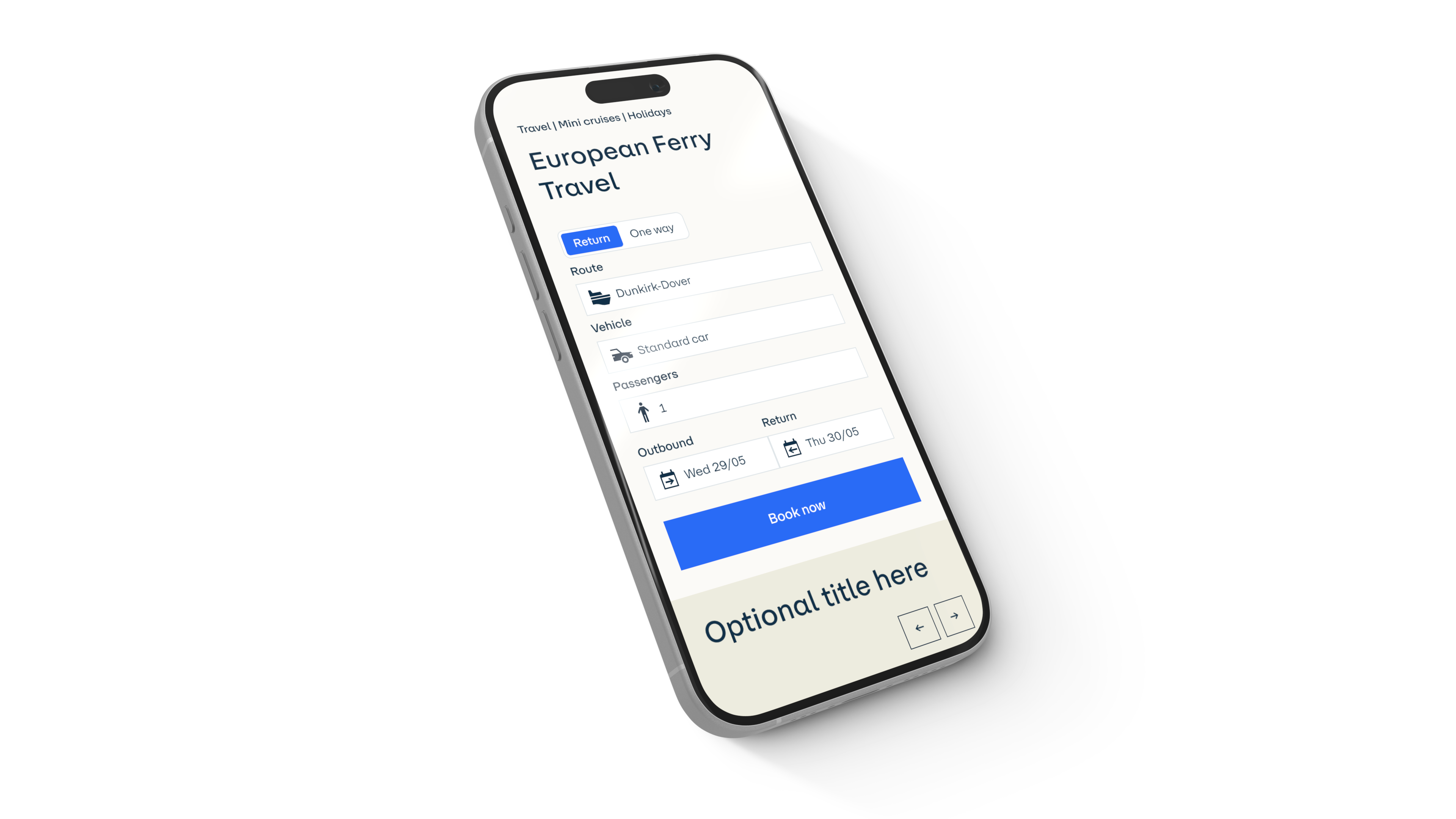
Building a Scalable Design System in 4 Months
Learn how we built a scalable design system in 4 months using Figma and shadcn/ui, reducing build times by 90% and enabling same-day marketing page creation for a European travel company's digital transformation.
Case Study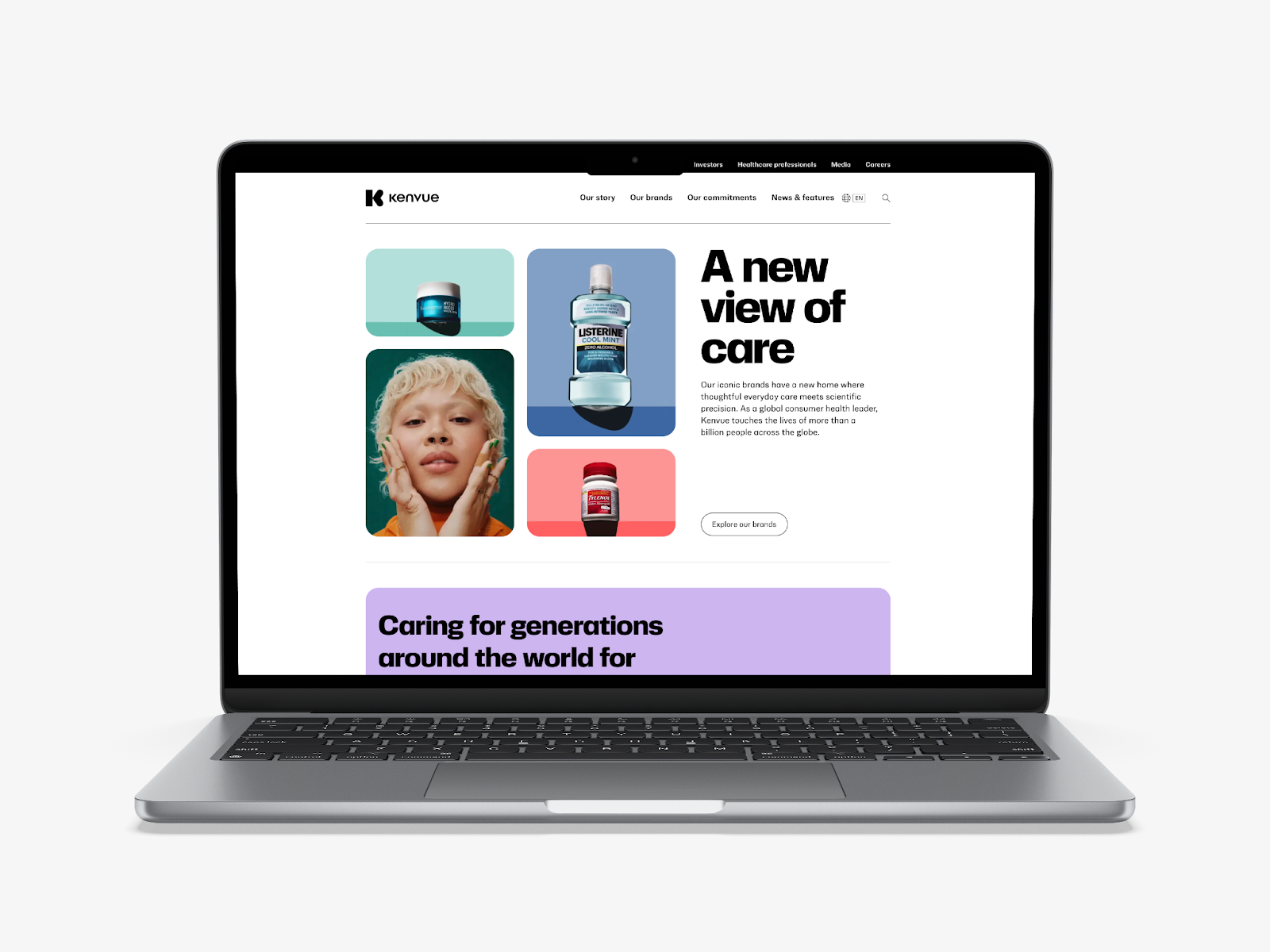
Kenvue
Building a new view of care in 3 months
We helped Kenvue modernize its digital presence by deploying a composable DXP and design system, enabling efficient migration and brand consistency across 80+ brands.
Case Study

Emburse
Revolutionizing B2B SaaS Marketing: A Successful 6-Month Migration from Crownpeak to a Modern Tech Stack (Vercel, Sanity, Next.js)
Revolutionizing B2B SaaS Marketing: A Successful 6-Month Migration from Crownpeak to a Modern Tech Stack (Vercel, Sanity, Next.js)
Case Study
Headless Website Migration & Launch in 7 Weeks
Within 7 weeks, we migrated and launched a US-based trading firm's website on Stackbit and Next.js. Without disrupting content production, we migrated over 500 pages, modernized the tech stack, and empowered content authors with a user-friendly authoring experience. The result was a fast, new site with a load speed of under one second.
Case Study

Hims & Hers
4 weeks to market: A new headless e-commerce platform for Hims & Hers
A new headless platform leveraging Contentful & React in 20 days.
Case StudyFrequently Asked Questions
A headless CMS separates content management from content presentation. Unlike traditional CMSes (WordPress, Drupal) where content and display are tightly coupled, a headless CMS stores content as structured data delivered via APIs to any frontend: web, mobile, smart displays, or AI systems. You should consider migrating when your current CMS creates an engineering bottleneck (every content change requires developer involvement), when you need to deliver content to multiple channels from a single source, or when page performance suffers because your CMS generates slow server-rendered pages. Rangle has migrated organizations from legacy systems to modern headless stacks, typically achieving sub-one-second load times and eliminating the engineering bottleneck for content updates.
The right choice depends on your content complexity, team composition, and integration requirements. Rangle partners with and has deep experience across Contentful (strong for large enterprises with complex content models and multiple teams), Sanity (excellent for developer teams that want maximum flexibility and real-time collaboration), and Builder.io (best for organizations where marketers need to create and publish without developer involvement). We also work with Vercel for frontend hosting and deployment. Rather than recommending a single platform, we assess your specific needs: content workflow, team technical skills, integration landscape, and scale requirements, then recommend the platform that best fits. We've seen the costly mistakes that come from choosing based on marketing materials rather than actual fit.
Migration timelines depend on content volume and complexity. For mid-size sites (100-500 pages), expect 6-10 weeks including content modeling, migration scripting, frontend development, and testing. Rangle built and migrated Endy's headless e-commerce platform with Sanity, Vercel, and Shopify in 10 weeks, and launched Hims & Hers' new headless e-commerce platform in 4 weeks. For larger migrations (500+ pages), the timeline extends to 12-16 weeks but the approach stays the same: structured content modeling first, automated migration scripting second, then frontend build with iterative testing. We prioritize high-traffic pages for early migration so business impact is positive from the start, not just at the end.
Yes, and headless CMS architectures are actually better suited to personalization than traditional monolithic CMSes. Because content is delivered via APIs as structured data, you can combine it with user behavioral data, segmentation, and AI models to deliver personalized experiences across every channel. Rangle helps organizations leverage user data and behavior to create targeted campaigns that resonate with individual preferences and needs. The headless architecture means personalization logic lives in the frontend application layer, not locked inside the CMS, giving you more control, better performance, and the ability to evolve your personalization strategy without re-platforming your content management system.
Content migration is the most underestimated part of a headless CMS project. Rangle approaches it systematically: first, we audit existing content to identify what should migrate as-is, what needs restructuring, and what should be retired. Then we design the new content model in the headless CMS. This is the most critical step because the model determines how easy content is to create, manage, and deliver long-term. Next, we build automated migration scripts that transform content from the old format to the new model, preserving relationships, metadata, and media assets. Finally, we run the migration in stages with validation at each step. No content is lost, and the process is repeatable so it can run multiple times during the transition period.
From the blog
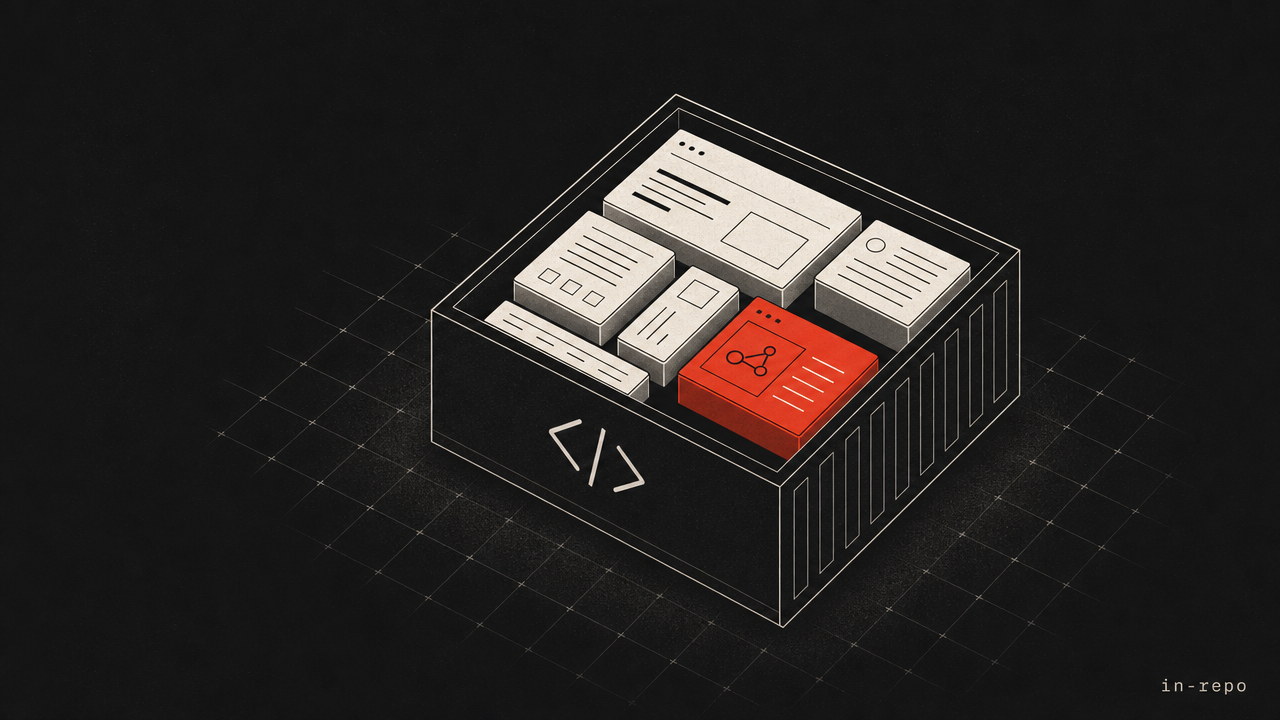


What is an Agentic CMS?
Your CMS shouldn't require a vendor's permission to evolve.
Escape CMS & Commerce Lock-In
Why Your Digital Experience Platform Will Fail Without a Monorepo: The Architecture Decision That Makes or Breaks Enterprise Digital Platforms
Most enterprise DXP failures stem from a single architectural flaw: fragmented codebases. A monorepo enforces integration discipline, reduces costs, and enables AI-driven personalization. Without it, your platform is at risk of collapse. If you're responsible for delivering a scalable customer platform, here's why foregoing a monorepo architecture is a strategic liability.
Escape CMS & Commerce Lock-In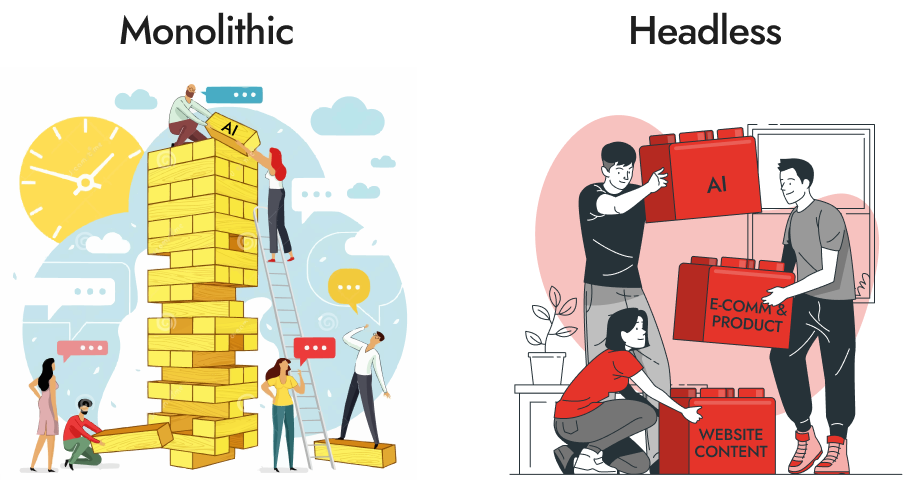

Why you should go headless to ship AI-driven experiences
Adopting a headless architecture enables businesses to launch AI-driven experiences faster – without requiring a complete overhaul of existing tech stacks. Industry leaders like Nike and Alaska Airlines use this approach to cut costs and deliver AI-powered customer experiences that set them apart.
Escape CMS & Commerce Lock-In