Talent Development
Our services

Designing a Dojo
It's best to think about immersive working environments as "hubs" or "camps", where Pods can deeply engage in the envisioned future state of transformation. These spaces are purpose-built to facilitate hands-on, outcome-driven work that addresses real-world challenges, fostering rapid learning and innovation in a collaborative setting.
See how we can help
Staffing a Dojo
Staffing a dojo requires a coordinator for administrative and operational tasks, and three coaches: a process coach to foster discovery and delivery techniques; a product coach to transition teams from project to product mindset; and a technology coach to enable frequent releases. Occasionally, a niche subject matter expert may be needed.
See how we can help
Operationalizing a Dojo
We'll work with you to establish intake, consult, and charter processes that are tailored to your specific needs, and that ensure everyone is aligned and focused on delivering measurable results.
See how we can helpRangler Perspectives


How harsh prioritization helps for successful Lean projects
Prioritization in Lean projects is not a means to manage scope and budget; it is a tool to ensure that you remain focused and deliver fast towards a MVP that will help validate a hypothesis and market fit. Read on for how we do Lean delivery at Rangle.
Launch New Products
An Architect's Perspective on Generative AI and His Future Teammates
A software architect reflects on two talks at FITC Web Unleashed 2023 that shaped his thinking on generative AI — exploring how different groups are adopting LLMs, the ethical tensions around training data, and what it will mean when today's AI-native students become tomorrow's teammates.


An architect's perspective on career growth
We use Junior, Intermediate, and Senior in our conversation, but know these seniorities are somewhat arbitrary. During our talk, we discuss that the Junior archetype needs support to complete complex tasks and learn new tools. Intermediate developers are looking to tackle larger problems but don't have the problem-solving experience required to tackle difficult problems without support. Senior developers are the first to reframe a problem and efficiently solve problems and match the problem to its appropriate context. We see Seniors as developers with the most problem-solving experience and not developers with the most knowledge.
Build Engineering CapabilityEmployee Spotlights

Rangle Employee Spotlight: Get to know Jas Der
Meet Jas Der, one of our Agile Delivery managers at Rangle. Get to know more about their role, what success looks like as an Agile Delivery Manager at Rangle, and their hobbies and interests outside of work.

Rangle Employee Spotlight: Get to know Deidre VanWynsberghe
Meet Deidre VanWynsberghe, Software Architect at Rangle. Get to know more about her role, what success looks like as a software architect, and her hobbies and interests outside of work.

Rangle Employee Spotlight: Get to know Stephanie Zeng
Get to know Ranglers in our new employee spotlight series on our blog. This series will give you a glimpse into the lives and experiences of our team members. You'll learn about their roles, how they got started in their careers, and their unique perspectives on working at Rangle.
Related expertise

Operating Model
Product & Platform Operating Model
Align teams around a product and platform model that supports real delivery speed.
See how we help
Design Systems
Design Systems
Build a design system that helps teams ship on time and on brand.
See how we helpRelated case studies
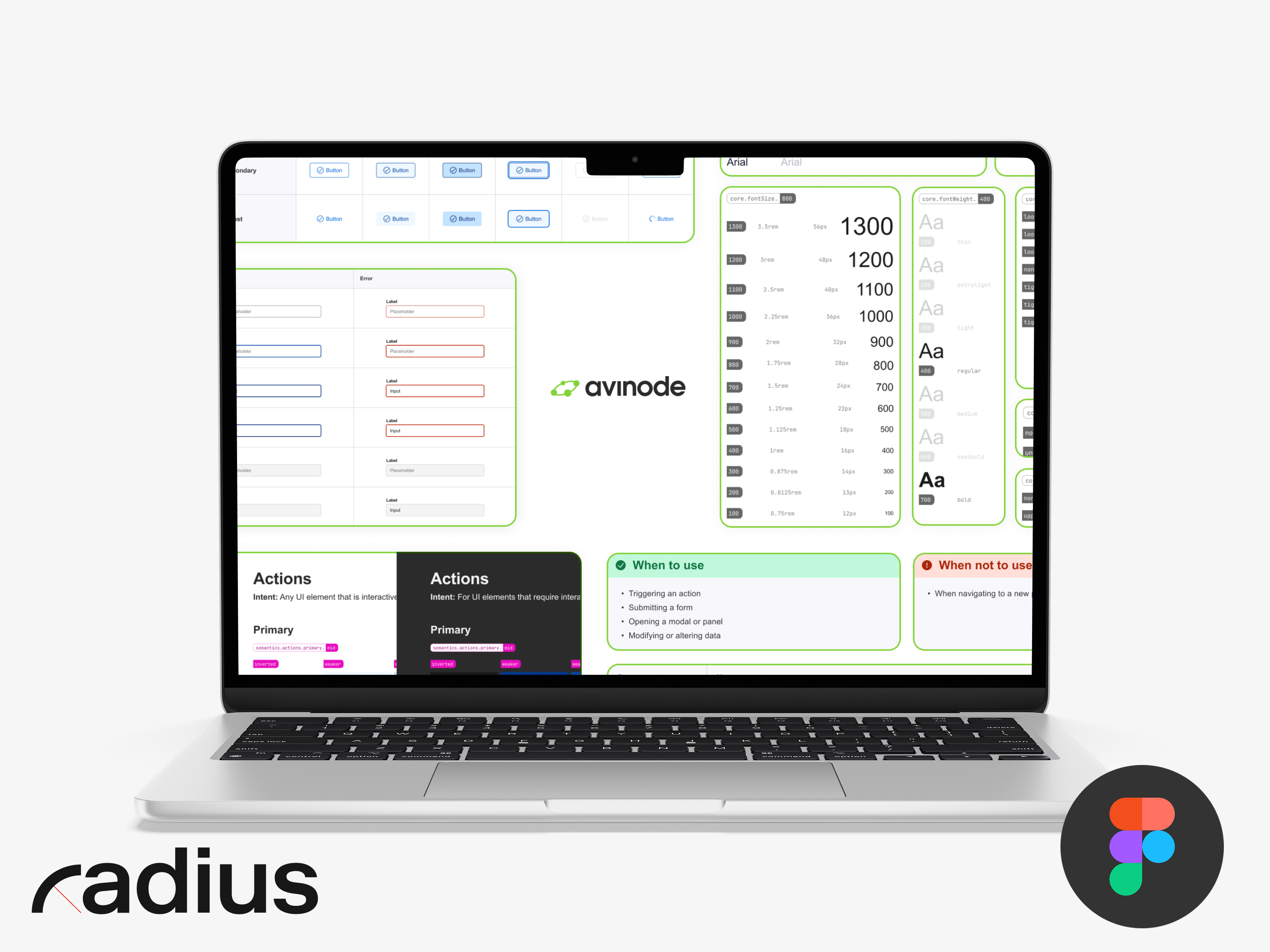

Avinode
A design system foundation in 6 weeks
How we built a scalable design system foundation for Avinode in 6 weeks, unifying global teams and accelerating development across their aviation platform.
Case Study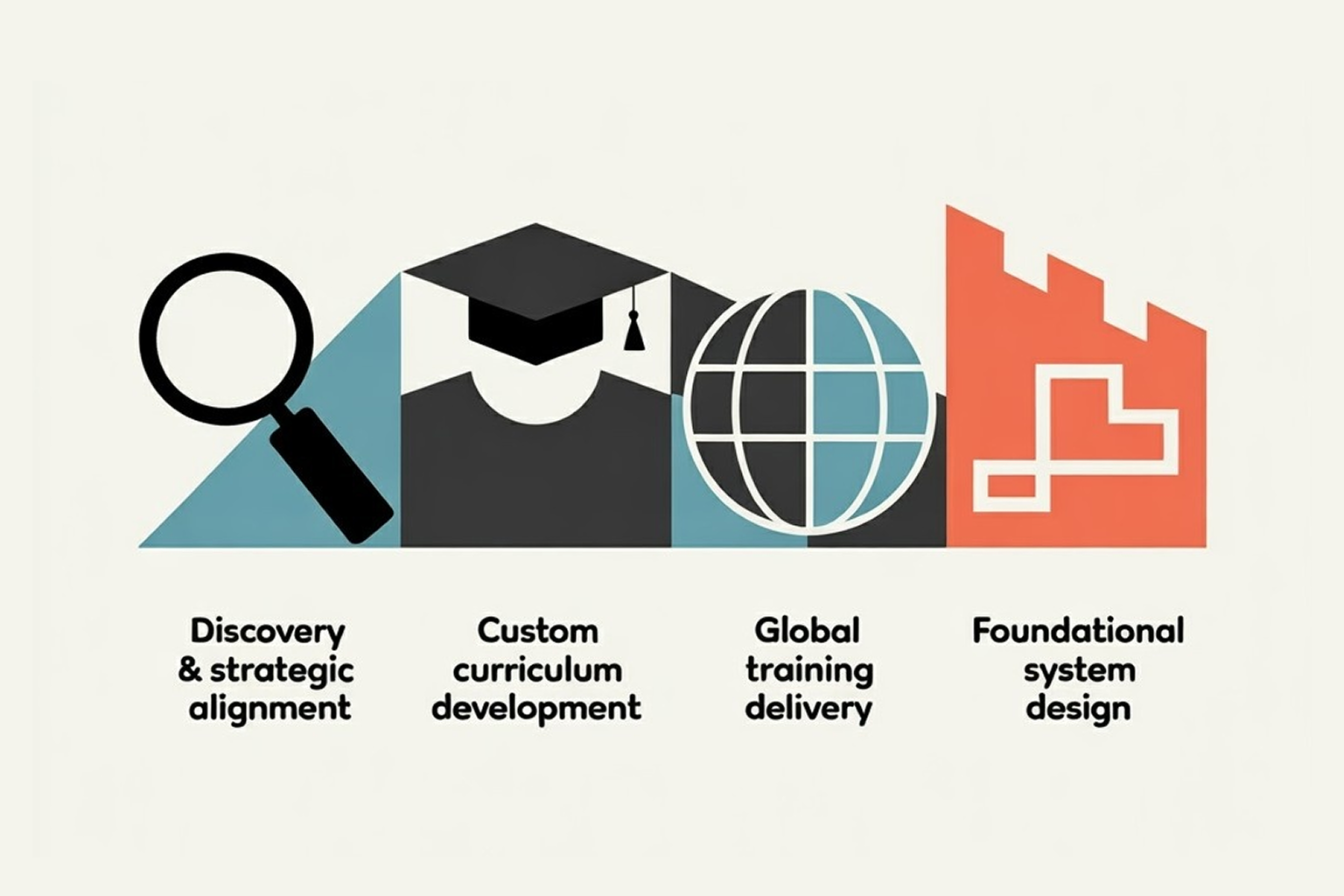
The North Face
The North Face: Global Figma Training & Design Ops Transformation in 6 Weeks
How we helped The North Face's global design teams streamline operations, standardize workflows, and accelerate campaign delivery through strategic Figma adoption.
Case Study

Springboard
We helped Springboard build 10 design components in 5 weeks
We helped Springboard build 10 design components in 5 weeks.
Case Study
How we helped a leading office supply retailer build their digital roadmap in 8 weeks
We guided a leading office supply retailer to build their digital roadmap in 8 weeks.
Case Study

Invesco
How Invesco Enriches the Advisor-Client Experience with advisorDUO™
We delivered an app using industry-leading accessibility best practices for Invesco.
Case Study
Headless Website Migration & Launch in 7 Weeks
Within 7 weeks, we migrated and launched a US-based trading firm's website on Stackbit and Next.js. Without disrupting content production, we migrated over 500 pages, modernized the tech stack, and empowered content authors with a user-friendly authoring experience. The result was a fast, new site with a load speed of under one second.
Case StudyFrequently Asked Questions
A dojo is a collaborative learning environment where teams develop practical skills through hands-on experience rather than classroom instruction. The model comes from the Japanese concept of a practice hall: a dedicated space for deliberate skill development. In Rangle's implementation, a dojo brings together learners and experienced practitioners to work on real projects using modern tools and practices. Teams rotate through the dojo in 6-8 week cycles, learning by doing alongside coaches who provide guidance, feedback, and mentorship. The result is faster skill acquisition, better retention than traditional training, and teams that emerge with practical experience rather than theoretical knowledge.
Traditional training relies on classroom instruction, slides, and exercises disconnected from real work. Experiential learning immerses people in actual projects with real constraints, deadlines, and outcomes. Research consistently shows that hands-on learning produces better retention, faster skill development, and stronger problem-solving capabilities than passive instruction. The difference is especially pronounced for technical skills: engineers learning a new framework by building a production feature retain far more than those who complete a tutorial course. Rangle's dojo model is built entirely on this principle. Every learning experience is grounded in practical application, not theoretical exercises.
Setting up a dojo typically takes 4-6 weeks of foundational work before the first cohort begins. This includes defining the dojo's purpose and scope (which skills, which teams, what outcomes), designing the physical or virtual space to promote collaboration and creativity, establishing intake and charter processes, and recruiting or training coaches. Rangle partners with organizations through this entire setup process, then provides ongoing support as the first cohorts move through. Once established, a dojo operates on repeating 6-8 week cycles, with each cohort building on the processes and materials refined by previous groups. Most organizations see measurable skill improvement within the first two cohorts.
Dojos are most effective for skills that require practice and judgment, not just knowledge. This includes modern software engineering practices (cloud-native development, test-driven development, CI/CD), product management capabilities (discovery techniques, outcome-based planning, stakeholder management), design skills (design thinking, user research, prototyping), and ways of working (cross-functional collaboration, agile practices, technical leadership). The dojo model is less effective for purely theoretical knowledge or compliance training where practice isn't the bottleneck. Rangle helps organizations identify which skills will benefit most from dojo-style learning and designs curricula that match the organization's specific capability gaps and business objectives.
Rangle measures dojo impact at three levels. Skill acquisition: can team members demonstrate the target capabilities in their actual work environment? We use practical assessments, not written tests. Team performance: do dojo graduates deliver faster, with fewer defects, and with better cross-functional collaboration? We track delivery metrics before and after dojo participation. Business impact: does the organization's overall delivery capacity improve as more teams cycle through the dojo? This is the ultimate measure. Training that doesn't translate to business outcomes isn't working. We establish these metrics during dojo design so measurement is built into the program from day one, not retrofitted after the fact.
From the blog


Why pair programming is essential for remote learning
According to recent Gartner research, nearly 50% of employees across industries will continue to work remotely when the pandemic is over.
Build Engineering Capability

Dice Loss Consultancy: Making a game of consulting
At the risk of boring you at the very beginning of this blog, let's look at some stats: Only 21% of employees are engaged at work, according to the latest worldwide poll from Gallup. In North America and Europe, where Rangle's offices are located, 33% of North Americans report that they feel they are thriving — and only 14% of Europeans.
Build Engineering Capability

Hiring the whole person: The why and how of a great talent acquisition program
As the Great Reshuffle sweeps through the US, attracting the right talent and building a genuine culture is on the minds of every C-level executive — including those outside of the US, who worry that their country is next.
Build Engineering Capability