How an Interior Design Firm Replaced a Legacy Platform in 4 Months With Agentic Development
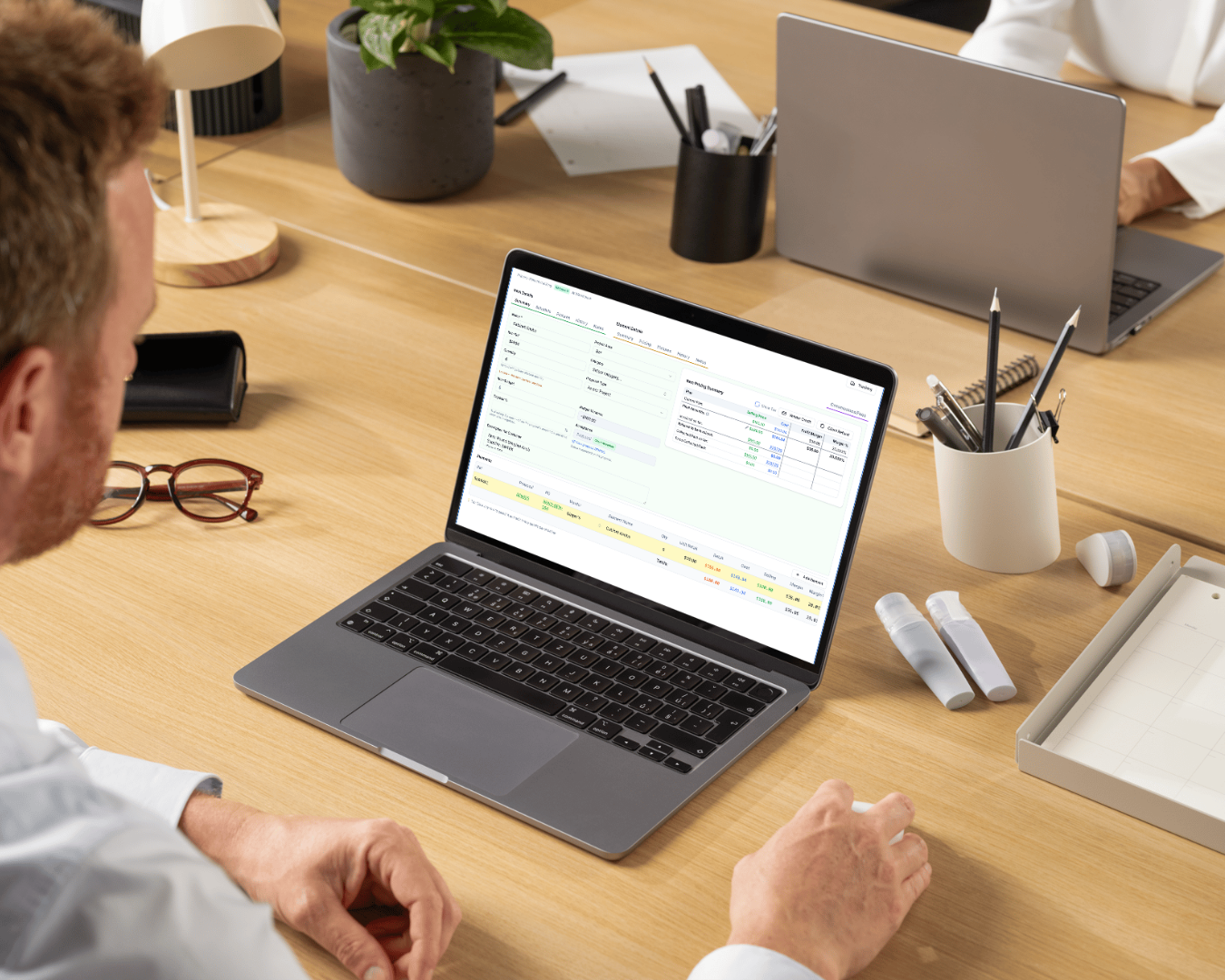
TOM Design Collective were running their entire operation on a closed legacy platform they couldn't extend or fix. Rangle designed and built DesignDrive, a modern operations platform TOM own outright, with a three-person team shipping at what they estimate as ten times conventional development pace. TOM have migrated off the legacy system and are running live client work on DesignDrive.
4 months
to MVP, now running live client work
3-person team
shipping at an estimated 10x conventional development pace with agentic development
One system
item management, orders, invoicing, and payments, replacing scattered tools and side spreadsheets
The firm
TOM Design Collective run an interior design practice managing concurrent residential and commercial projects across procurement, custom fabrication, vendor coordination, order management, and client billing. Like most firms in the category, they had been operating on a legacy industry platform that the interior design world has tolerated for years without a serious alternative.
The challenge
The legacy platform had become a structural drag on the business. Load times were slow enough to shape how the team worked around the software rather than with it. Core operational workflows (item management, order tracking, invoicing, payments) required too many steps and created surface area for errors the system didn't catch. Critical business situations the firm dealt with every week (price variances between quoted and actual costs, vendor returns, change orders) weren't modeled as first-class concepts, so the team handled them through workarounds and side spreadsheets rather than inside the system. That they ran a complicated multi-project business successfully on those rails says more about the team than the tooling.
The solution: DesignDrive
Rangle designed and built DesignDrive, a modern project and financial operations platform purpose-built for interior design firms. It replaces legacy workflows with first-class support for the structures interior design firms actually use:
Price variance tracking
The gap between quoted and actual costs is handled as a native concept, not a spreadsheet exercise.
Returns and change orders
The operational realities firms handle every week are modeled inside the system rather than worked around it.
Retainers, credits, and expenses
Client accounting primitives are distinct first-class structures, with custom tax rates configurable per project and per jurisdiction.
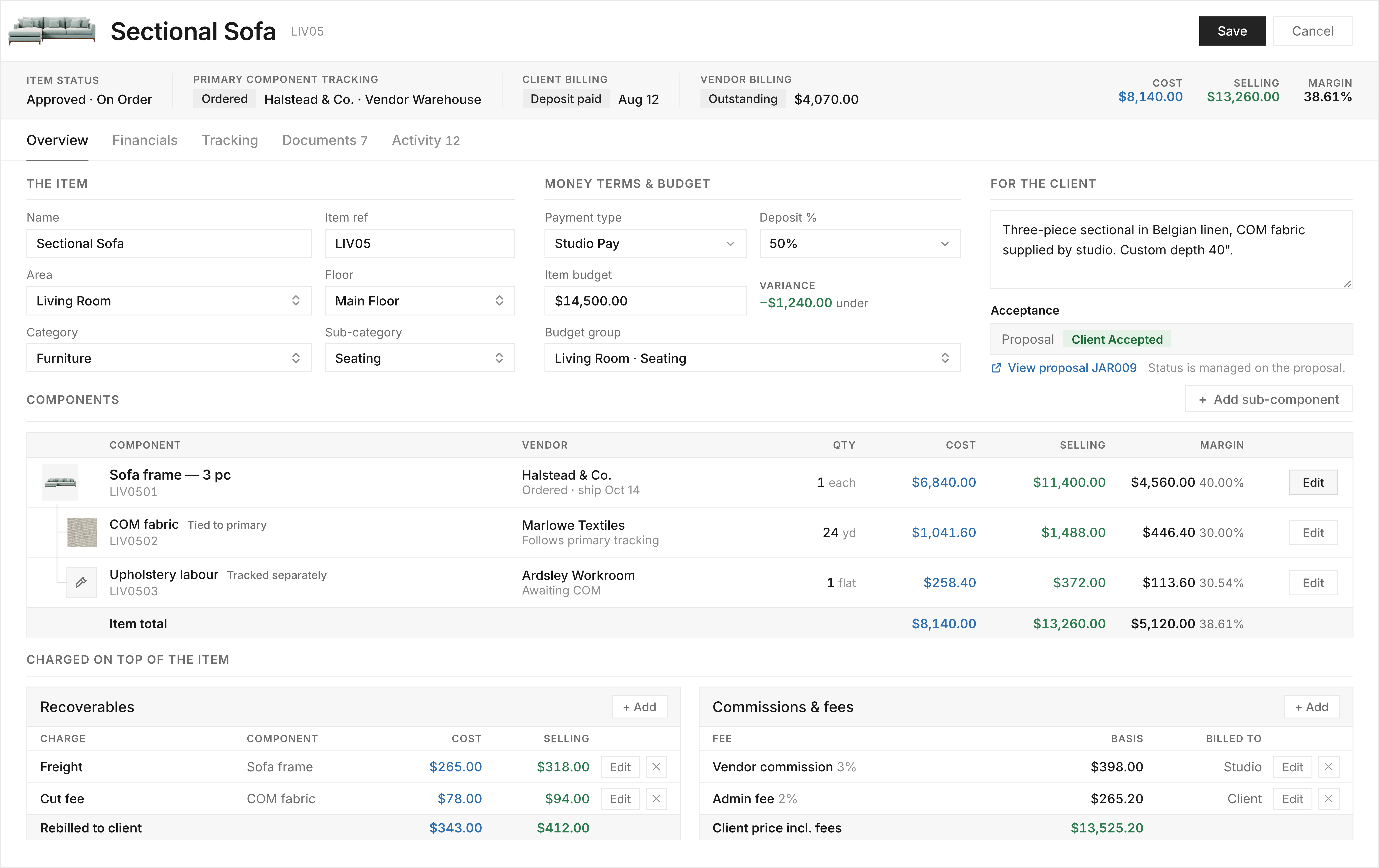
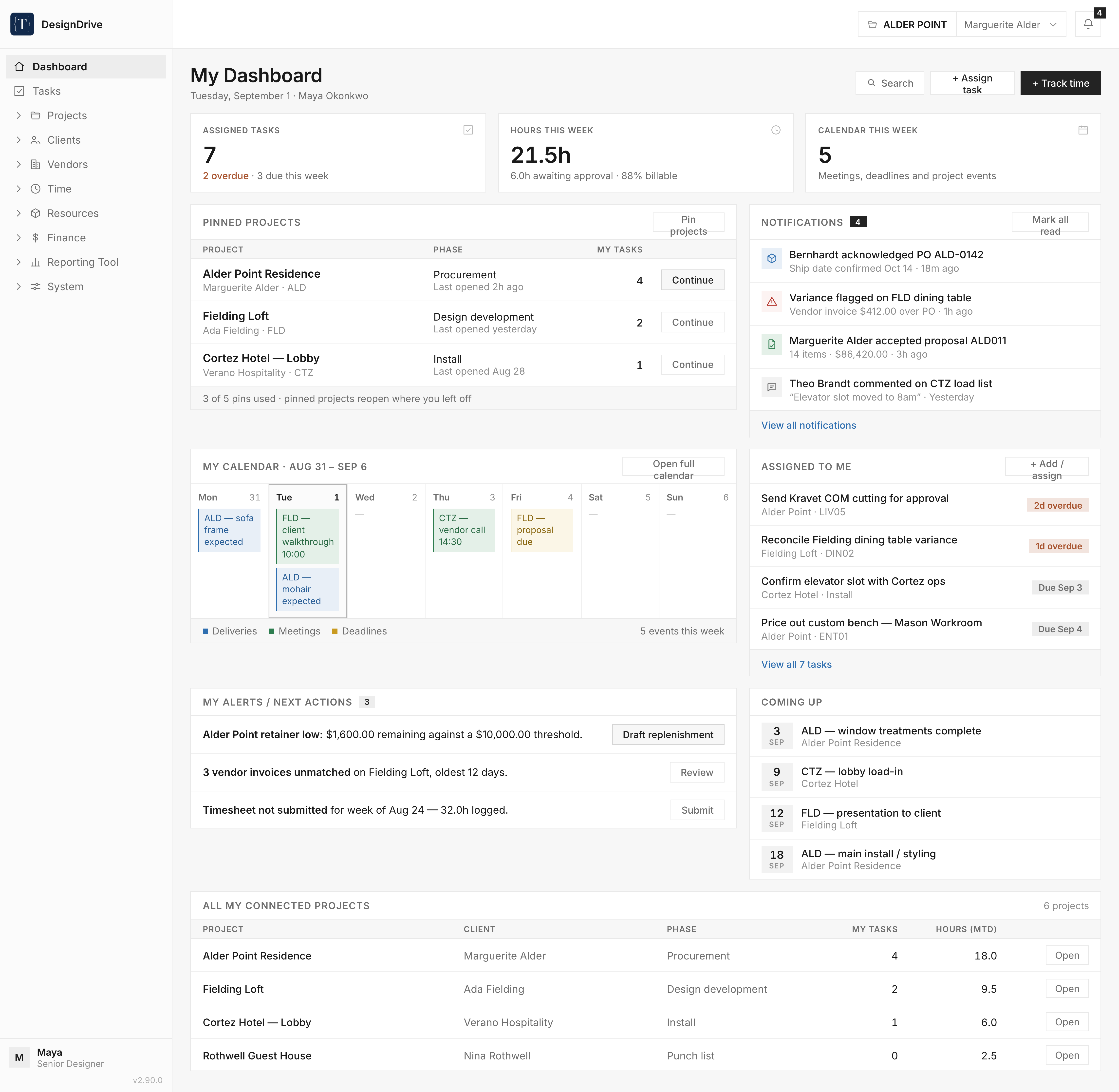
The UI and UX are built around how design teams actually work, with workflow rules that enforce correctness at the point of data entry rather than catching errors downstream. Item management, order tracking, invoicing, and payments all live in a single system with a clean underlying data model.
Owning the platform
TOM now operate on a platform whose codebase, data model, and roadmap are under their control. A three-person team, its focus split between migrating off the legacy system and building the new one, shipped the platform in four months: a development pace the team estimates at ten times conventional speed. That velocity is the new operating tempo. New capabilities ship at a pace closed legacy systems structurally can't match, and the platform evolves with the business rather than constraining it.
Status and early signals
TOM have migrated off the legacy platform and are running live client work on DesignDrive:
- New client engagements are being onboarded directly into the new system.
- The team strongly prefers DesignDrive over the legacy system across daily workflows, with friction points that previously consumed administrative time now handled natively.
- Workflow rules built into the system enforce correctness at the point of entry, closing off the manual-mistake surface the legacy platform left open on order management and invoicing.
- Price variance, returns, and other operational realities the legacy system didn't model are now handled as first-class concepts, eliminating parallel spreadsheets.
- The three-person team continues to ship new capabilities at the same estimated 10x pace, prioritized by live operational needs.
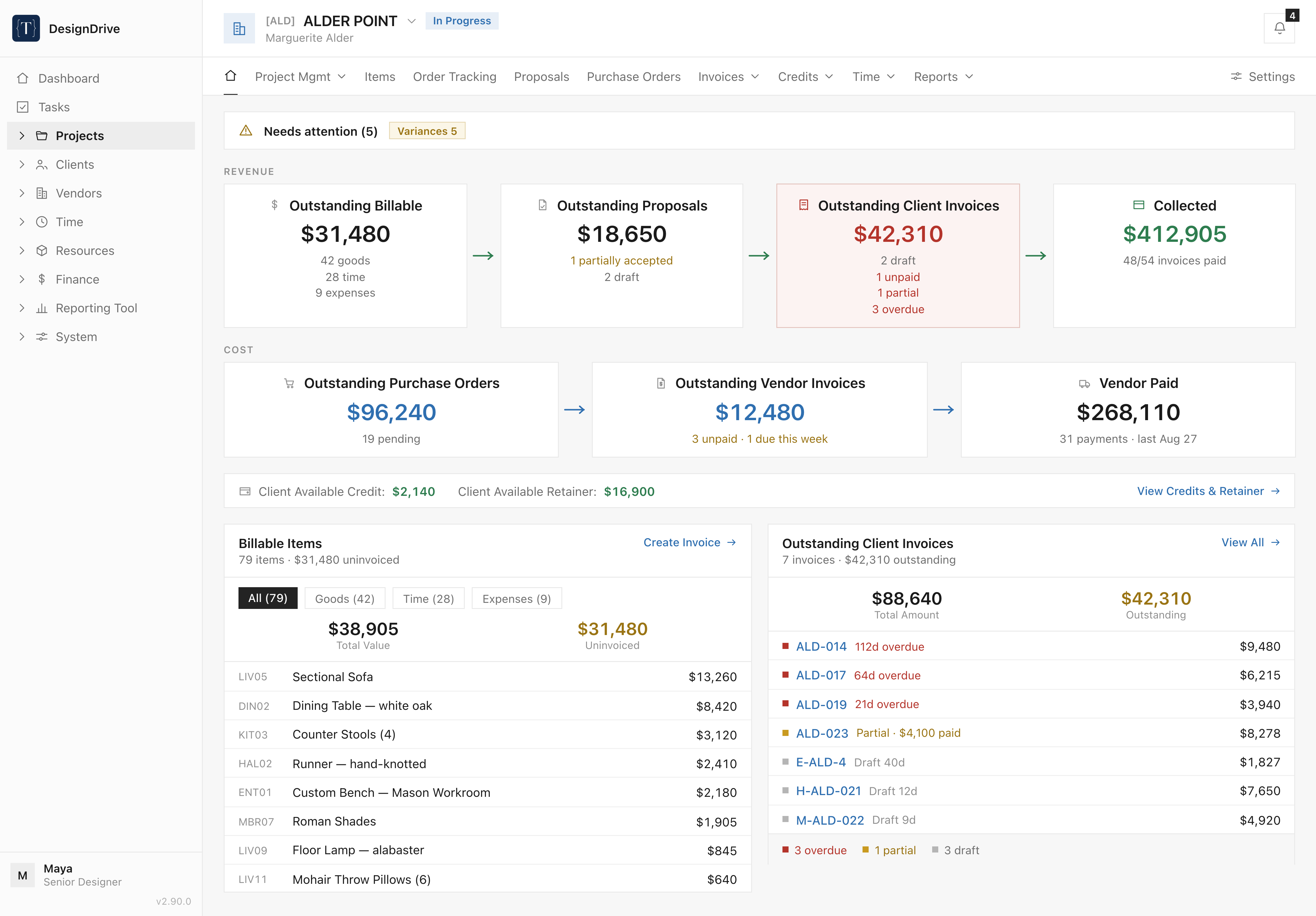
The value is a more accurate representation of their financial and working processes, on top of a complicated business. And now it's extensible: AI automation and additional modules that extend beyond the market's current offerings.
— Amit Kanigsberg, SVP Agentic Product & Platform Strategy, Rangle
What comes next
With a modern foundation underneath, DesignDrive is positioned to embed intelligent automation directly into operational workflows. Pricing new opportunities is an early example: a process that historically required hours of manual research and vendor outreach can become something the platform handles end-to-end, with agents doing the legwork and the designer making the calls that actually require judgment.
The commercial path extends to other firms: design firms ready to move off the legacy incumbents can operate on DesignDrive as a managed service, inheriting a system already tested on real project work.
Stuck on a legacy platform?