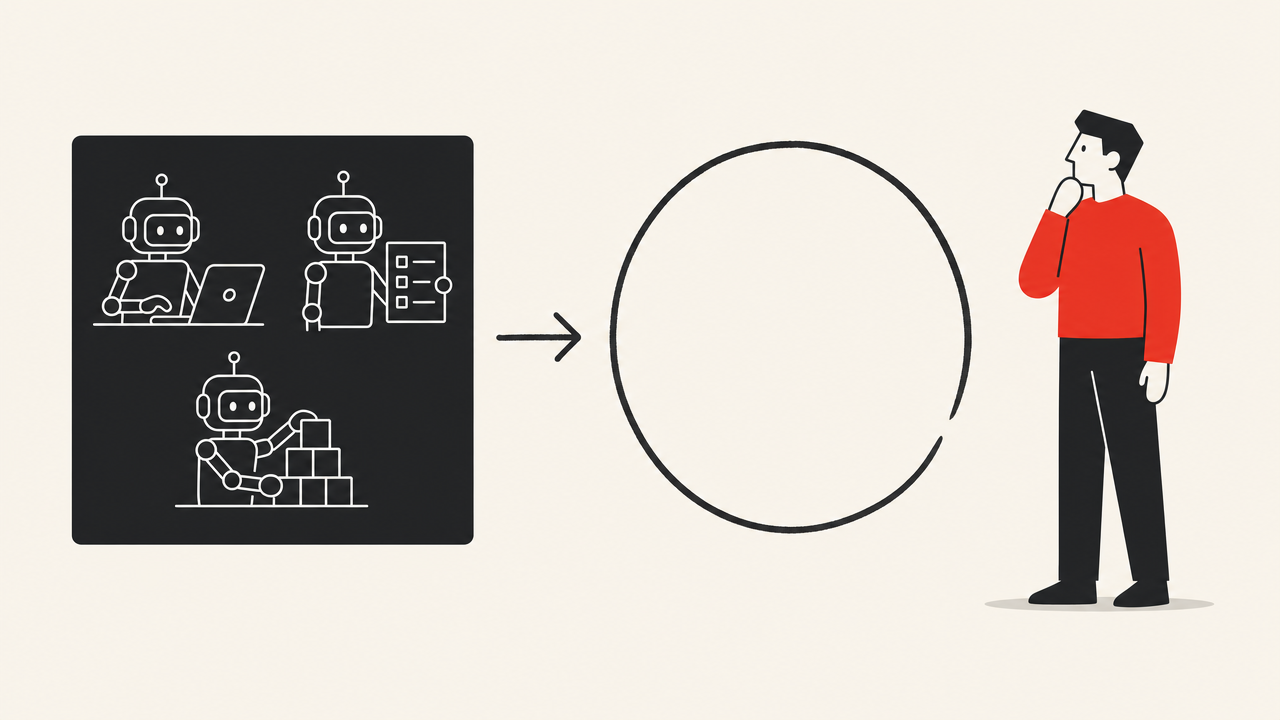


For most of us, working with AI is still a solo act: one person, one chat, one stream of prompts, maybe even a team of agents. But what could it change about the way a team of people works together? One of our recent meetings was an experiment in finding out.
The meeting was the Ridgeline weekly, a recurring Rangle gathering with no agenda, where people from across the company bring whatever they're working on and topics drift on purpose. Partway through, Ben Hofferber mentioned that he had been having Claude "live blog" the conversation, a nod to the running notes writers like Simon Willison post during a talk. Nick Van Weerdenburg asked, "Is it doing that in real time?"
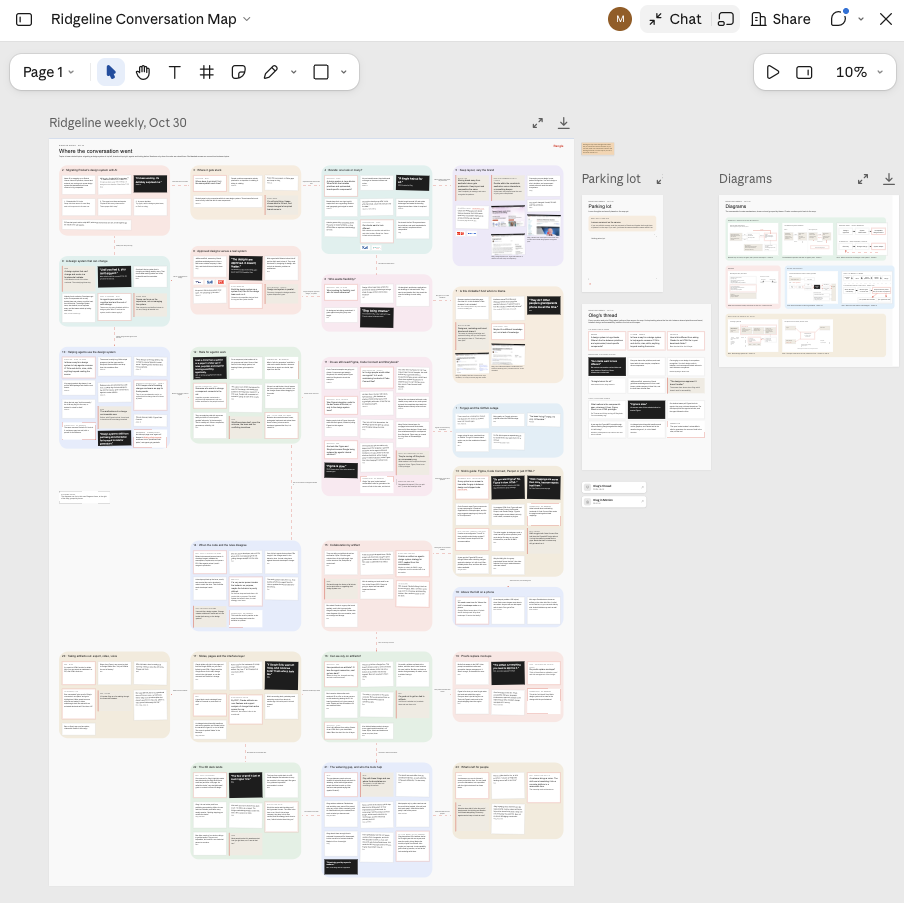
Nearly. Ben was pasting chunks of the live transcript into a Claude session, and Claude was turning each chunk into cards on a shared board that anyone in the room could open and comment on. By the end of the meeting, a room of people was directing an agent together, and their comments had grown the board a diagrams page, a deck and an animated 3D page. And the board changed what a conversation that wanders on purpose leaves behind.
The useful things usually get made after the meeting, or never
A transcript or a summary runs in the order things were said. A meeting does not. A topic comes up, drops, and returns twenty minutes later from a different person. Afterward the three mentions are scattered across the page, and nobody has the job of putting them together.
The people who were there also cannot add to the record while the talk is still going. A gap found days later, if it is found, has no one around to fill it. The pictures, references and diagrams that would have helped are made later by whoever finds the time, or not at all.
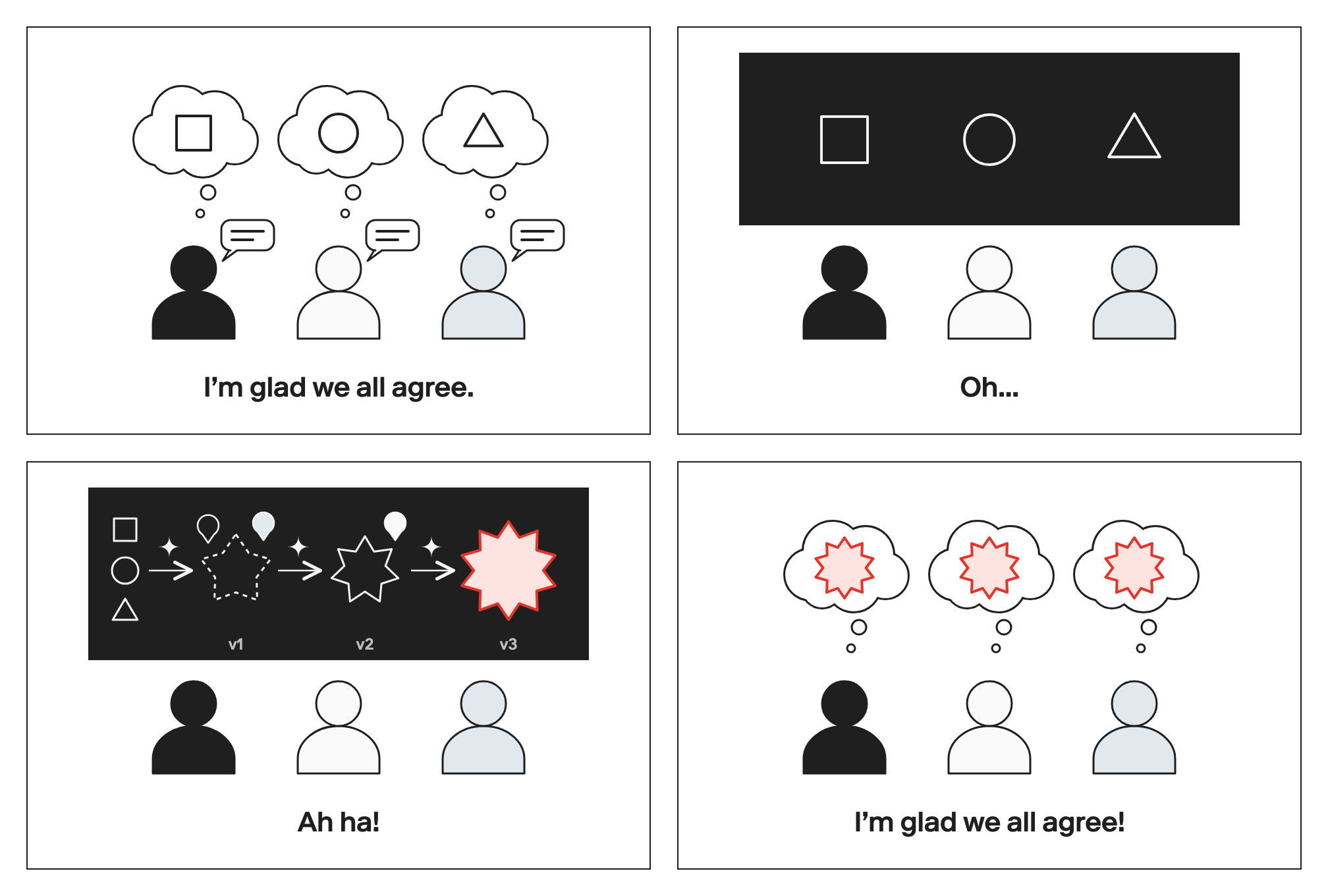
Turning words into a picture is how a group finds out whether it understood the same thing. Jeff Patton's User Story Mapping has a well-known illustration of it: several people hear the same description, each pictures something different, and only when they draw it out do they find the gap and reach shared understanding. A diagram gives everyone a mental model to point at, question and correct, which a page of notes rarely does. In our experience, drawing rich diagrams and illustrations from a conversation is also one of the things LLMs have been getting better at most quickly.
AI note-takers help, up to a point
Note-taking tools like Granola take some of this off the table. They listen, transcribe and hand back a tidy summary right after the meeting, and nobody has to play scribe. That's a real improvement. But what you get is still a long summary: something to read, not something to work with. The idea that came up three times is still split across bullets, the diagram still isn't drawn, and nobody can point at a part and say "that's wrong, change it." Most of those summaries get skimmed once and filed.
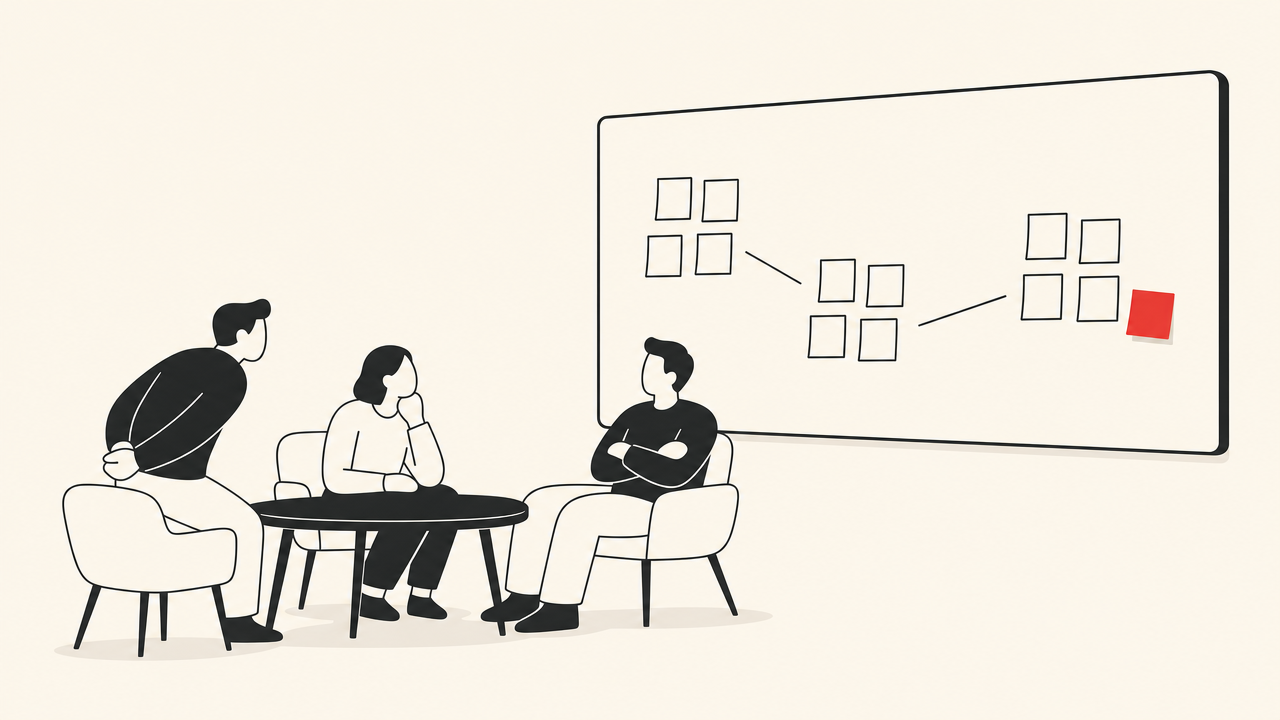
An interactive whiteboard works differently, with the LLM acting as an assistant to the whole room. It maps the dialogue as it happens and turns it into artifacts that help people follow it and build a shared mental model: topics grouped by what they're about, with diagrams, quotes and links side by side. And the people in the room can comment on it and get it changed while they're still together. A summary tells you what happened. A board gives the team something to keep working with.
A collaborative canvas that answers back
Claude turned each pasted chunk into new cards or edits to existing ones, and labelled any card that was its own reading rather than something said aloud. The first versions were one long list, which was the transcript again. Ben pushed Claude to make it freeform, then spatial, grouped by what a topic was about and not by when it came up. That step turned a live blog into what we now call live mapping: an agent keeping a shared map of the conversation and acting on what the room asks for while the meeting is still running. Claude then drew labelled connections between the groups, and helper agents pulled in logos and article screenshots alongside the cards.
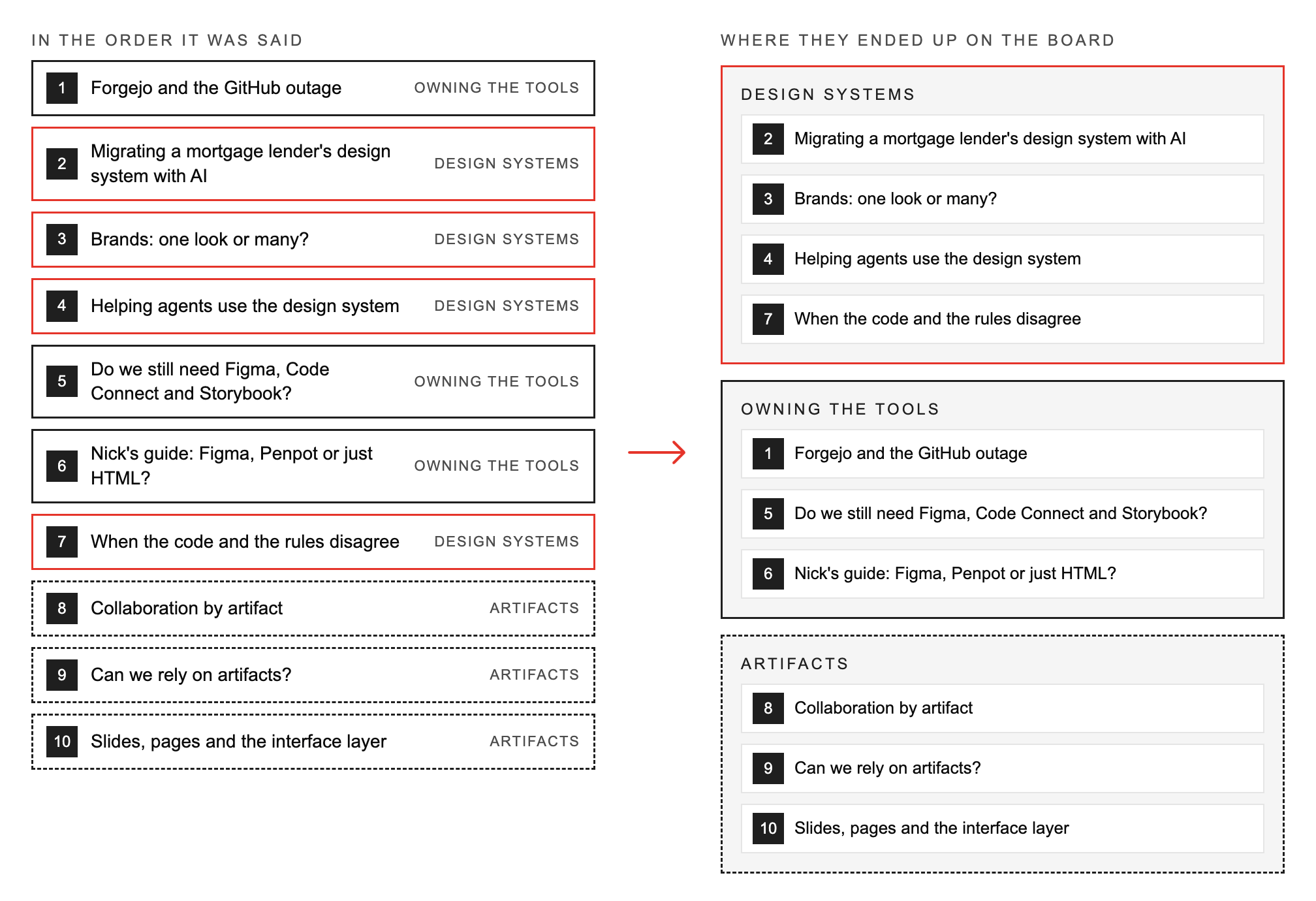

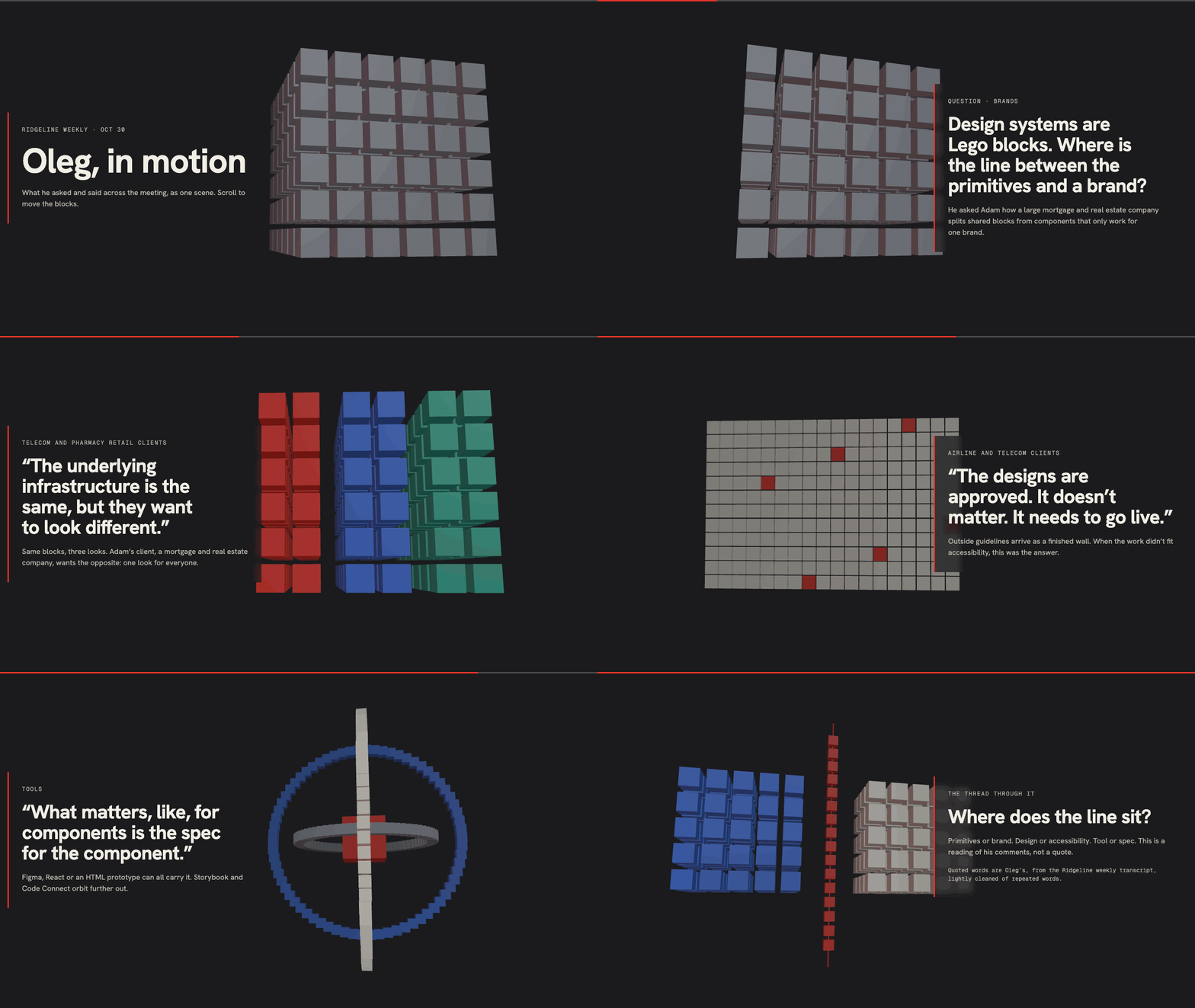
The comments are where the making happened. They weren't edits to a document but requests to an agent, which decided how to meet each one. A comment asking for diagrams became a separate diagrams page. A comment asking to collect all of Oleg Rakitine's points became their own thread on the board, and the next comment turned that thread into a deck with animations. When Ben wanted more motion than a deck could give, Claude built an animated 3D page from the same points. The whole run took minutes, not days: the deck appeared within seconds of Ben's comment asking for it, and the 3D page was published in under five minutes. A broken library link took two more minutes to fix.
Not all of it landed: a separate request for a highlight reel of insightful remarks produced two decks that didn't work. The board itself held up, and the drafts for this post and four others came from it afterward.
The board had rough edges too. The first spatial regroup didn't group things the way Ben expected, the transcript's speech-to-text errors had to be flagged on the cards, and with several people editing at once, Claude's changes sometimes had to be merged with theirs. That's why the board runs as a loop that pulls in comments every five minutes, rather than Claude fighting live edits.
What it sparked
What caught the room wasn't the board so much as what it pointed to. Mike Costanzo noticed it was built a chunk at a time, since Ben was pasting the transcript in by hand, and went straight to what it could become.
You could imagine just connecting it directly and it would be like a real time whiteboarding session on autopilot.
— Mike Costanzo, Agentic Product Lead
Pasting the transcript was the main step a person still did by hand. Once a chunk arrived, Claude decided where it belonged, and once a comment arrived, it decided what to build.
For us, the bigger shift is who gets to take part. A board turns spoken descriptions into something people can see, which makes it easier to work through ideas that pull in different directions. It also gives people who think visually, or who hold back in a large group, another way in. A comment on the board, or a diagram they asked for, sits on equal footing with whoever is doing most of the talking.
This board came out of one meeting, but it isn't a one-off. We've run several experiments like it over the last few weeks, and plenty of other teams are running their own. This one stuck with us because of what it did to brainstorming.
A wide-open conversation feels productive, but it often leaves little behind. The board didn't stop the conversation from wandering. It kept track of where it went, so the topics the room kept returning to ended up in one place, with something to look at and build on while we were still talking. It felt like the meeting got more out of the wandering, not less.
Seeing it closes the feedback loop
A better record helps, but the bigger gap is the making, which waits until after the meeting because nobody in the room can build things while also talking.
An agent working alongside the meeting changes that. Showing working software, not documents about it, is a core principle at Rangle, because people react to something they can see far more precisely than to a description of it. That closes the loop: an idea gets processed, evaluated and refined, not just recorded. A meeting can run that same loop while the people who had the idea are still in the room.
That's also a small version of how we approach agentic product engineering: people set the intent and judge the result, and agents do the making.
Thinking about how your team could work with AI together? Let's talk.
Try live mapping yourself
You don't need special tooling. A Claude artifact and a few invited colleagues are enough to test this on your next meeting.
- Start a Claude artifact. Ask Claude to make a board for your meeting. It's private to you until you share it.
- Invite a few people. Share the artifact with your team so they can open it and leave comments.
- Paste in the conversation as it happens. One person adds chunks of the transcript or notes, and Claude turns them into cards grouped by topic.
- Let Claude pick up comments. Ask it to check for new comments every few minutes and act on them. Turn this off when the meeting ends.
- Ask for things in the comments. A diagram, a deck, or a page that collects one person's points. Then react to what comes back.
Only paste in conversations your company's policies allow you to share with Claude.